A Big Thank You to the Sunflowers

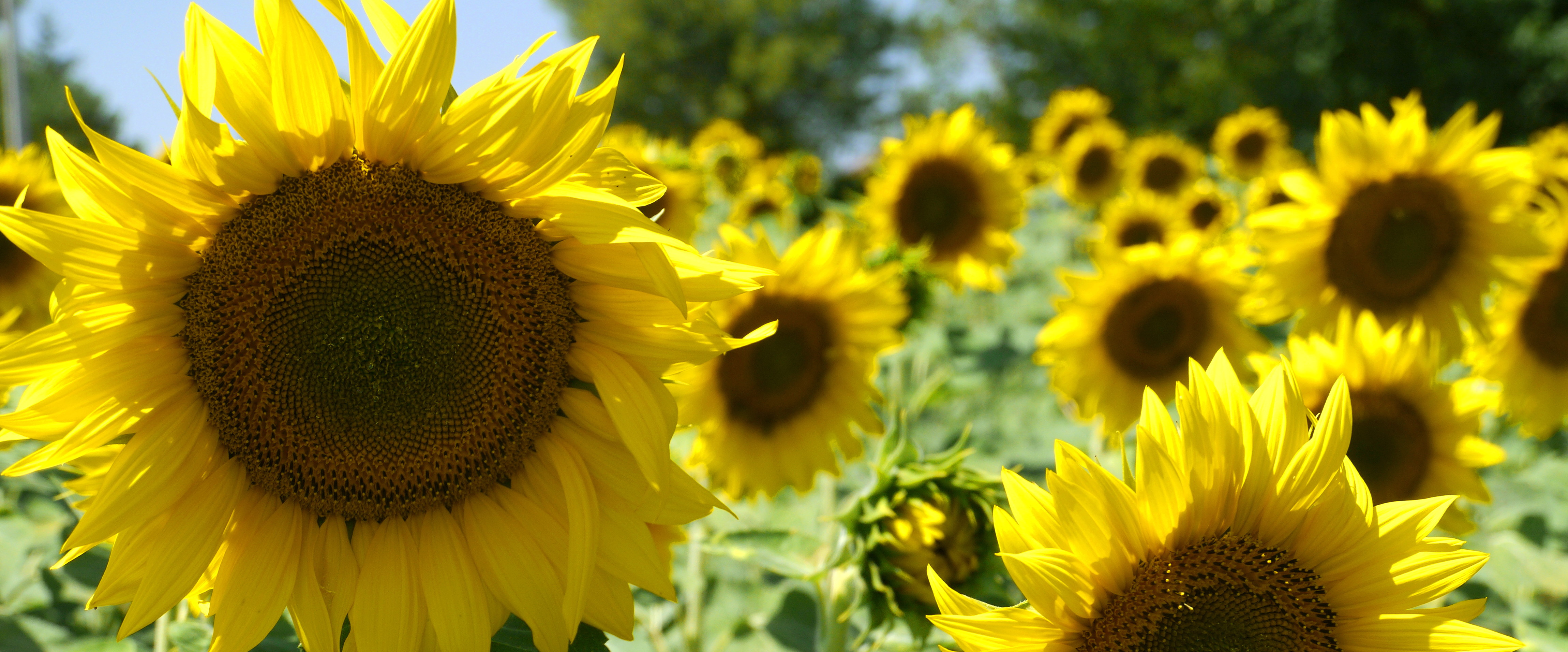
The sunflowers this summer have been quite magnificent, and the house has been surrounded on three sides by their sunny, cheerful faces. This years are even more special because of the added dimension of suspecting that they could possibly be providing the raw materials for our first honey.

At their peak, each flower had perhaps 2 or even 3 bees working away collecting pollen / nectar.

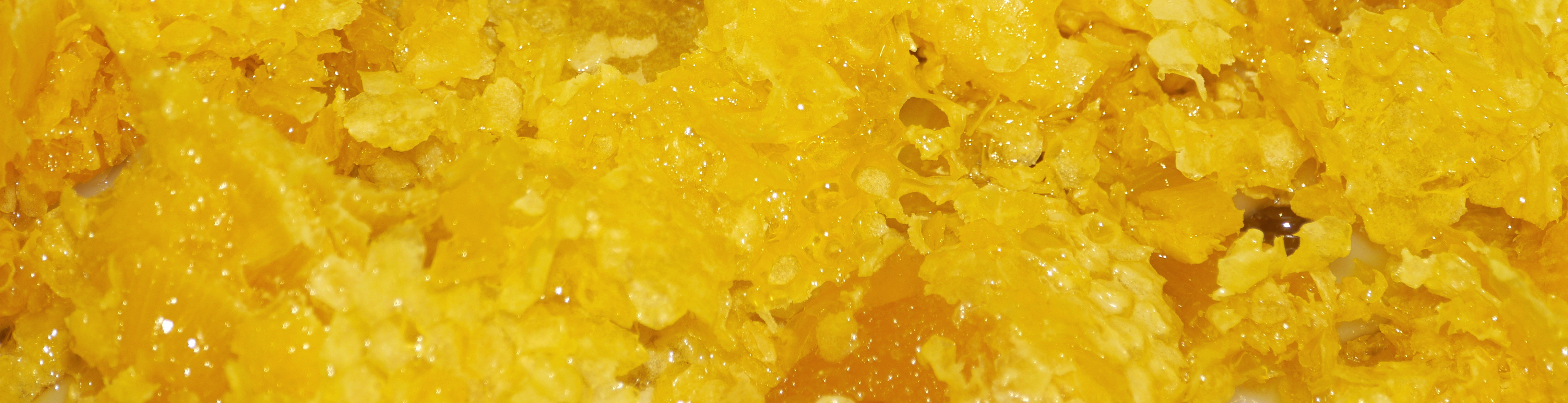
I think we can be fairly certain that the honey that we did harvest comes virtually exclusively from the sunflowers. In other words, its a monofloral honey. I like to think that the bright yellow colour backs this theory up. The honey is now starting to crystallise- so whereas the honey initially was clear and reasonably fluid, it is now more opaque and much thicker and creamy – but equally delicious.

I have read that honeybees collect mostly nectar from sunflowers, whilst wild bees collect the pollen. Honeybees however cannot avoid picking up pollen – and will transfer it from flower to flower. Sunflowers rarely self-pollinate, and scientific research shows that pollinated sunflowers have a higher seed yield. A nicely balanced partnership.

The sunflower head is made up of individual florets, which start to open from the outside in. In the image below, there are five or six rings of florets which have opened – and will continue to open at the rate of two or three rings per day. On the day I took this image, all the bees were to be found just in this inner rim of the sunflowers. Each floret will mature into a sunflower seed.

flowers within the flower

So, a big thank you this year to the sunflowers – not only for their aesthetic perfection, their colour and cheer – but also the 30 odd jars of super honey. I must go and deliver a big pot to the farmer who planted the sunflowers, although I’m not sure if he should be thanking us (and the bees) as well – I wonder if the seed output has increased.

they can even be used for floral displays

So now go, get out the door

you’re not welcome anymore

Nature is not cruel, only pitilessly indifferent (Richard Dawkins).

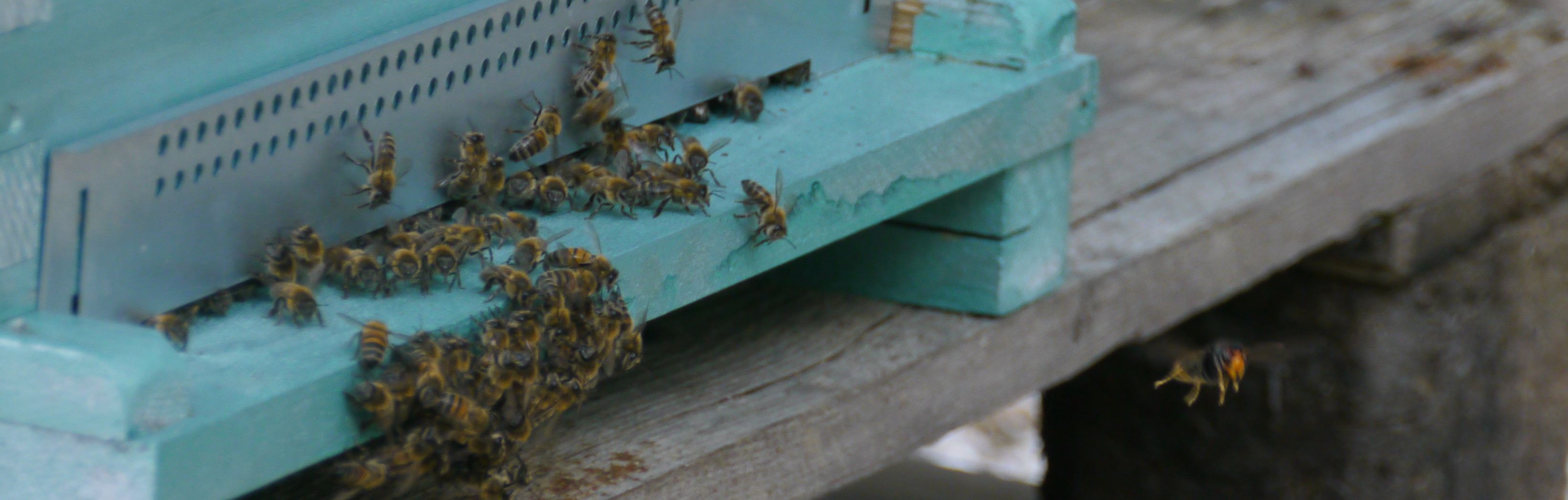
The poor, sad drones are being evicted from the hive. We are now moving into autumn, and the workers are kicking out the drones because they have no use for them any more and they are considered to be a drain on precious resources.

The drone cannot feed himself – he doesn’t have a proboscis for sucking nectar from a flower. He cannot defend himself, as he has no sting. He cannot make honey. Luckily for him though, he is good for one thing – and that’s wooing the queen bee and seeing to her intimate, feminine needs.

However with the change of season, the queen is moving into a phase of celibacy – and just wants to spend winter with the girls. So, poor old Mr Bee, without even having committed any crime, is sent unduly packing.

I would like think that there is some sort of Winter Rest Haven for Bloke Honeybees – somewhere to repair to after a heavy, hedonistic summer of eating, drinking and lots of bee nookie (and precious little else).

we will survive

A Bee in Andy’s Bonnet

bubbling crude

We have honey – our very first harvest!

Following much the same process as we did last week, with JP’s hive – in one hour, we had removed the honey frames, cut off the wax cappings and centrifugally extracted all the honey. Along the way, more lessons were learned too.

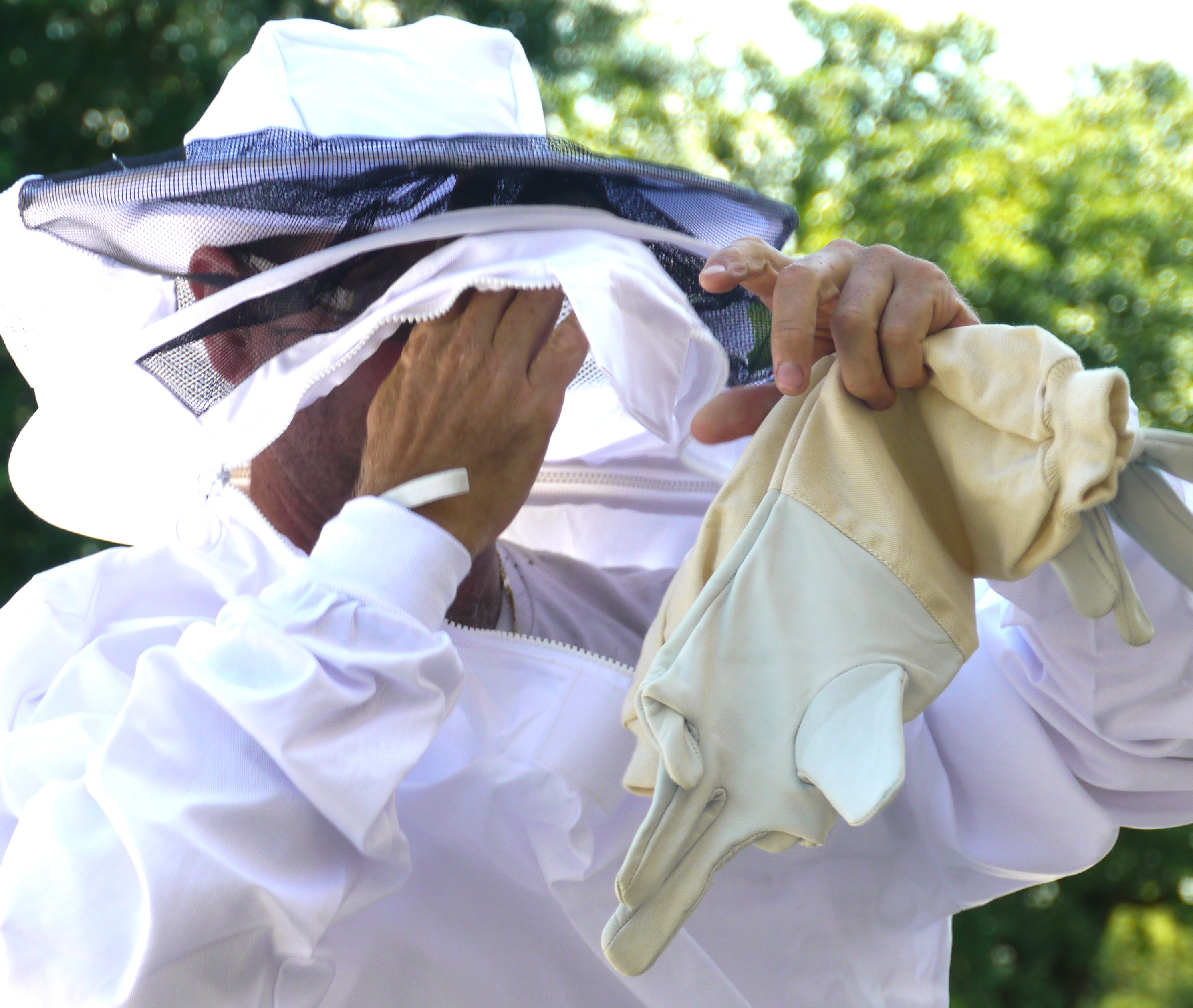
A top tip to remember for next time is to properly zip up the beekeepers suit. Andy must have left a small, bee-sized gap and was visited on the wrong side of his hat by one of the ladies. He did keep very calm, adopting a strange crouching position and managed to successfully shoo said intruder back into the open air without either of them suffering undue harm.

bee off with you!

Despite Andy’s little adventure, I realise that it is important to start trusting the beekeeper’s suit. With inquisitive bees buzzing around one’s head, it feels natural to back off – but so long as one carries on calmly and efficiently, keeping aware of any change in the bees’ mood, its okay to be right in there working on the hive.

Another tip is perhaps to sport gloves, even if only photographing, albeit from a short distance – JP was stung on the hand. Bees can be camera shy.

I wondered what to do with the messy mix left after the honey extraction, and decided to leave it to strain – and was happy to discover that this yielded about 300 ml of extra honey. The wax was then washed in warm water and has been melted down for a future project.

sticky mix of wax and honey, left after uncapping and filtering

Our ‘Extracting Room’ was used, in the olden days, to shelter animals, and has a massive tank once used in wine making. It’s certainly old, and has been the scene of a couple of inexplicable goings-on. Maybe we have a resident ghost, who likes to turn his hand to honey extraction…

We estimate a yield of around 8 kilos of the scrummy, sweet stuff – its all still sitting in the settling tank, waiting to be put into jars in a few day’s time. Time to reach for the honey recipes!

how sweet is this!

Liquid Gold

Uncapped Earnings

Having ditched the disguises, and made it hot foot round to the safe house (JP’s office), giving the bees the slip, we start to unload the treasure and the necessary equipment, ready to move in to Stage Two of the operation – the Extraction.

Men Beehiving Badly

JP has been tooling-up and amassing the requisite tackle, to be co-owned by us and new crew member, Vincent. The key piece of machinery is the Extractor. This is  a drum, containing three cages, each of which will hold a frame. Ours is hand powered, the handle is turned to start the frames spinning, and the honey is driven from the cells by centrifugal force.

bright shiny gadget ~ no plug, not even a USBee port

Other equipment is a long, serrated knife for uncapping the honey cells, and a large plastic tub over which the frame is worked. This is to catch any honey drips and bits of wax (aka cappings).

The frames are still warm (its about 35 degrees outside), and uncapping the honey is a delicious, exciting moment, as the deep yellow, sticky liquid oozes from the cells. The first attempt at removing the top cover of wax is rather gung-ho, and we realise that more of the cell has been destroyed than is strictly necessary.

The technique however is soon refined, and the first three frames loaded into the extractor. This is put into motion, and the honey starts to pool at the base of the extractor.

When all nine frames have been processed, the tap is opened and the honey literally gushes out. It is passed through a filter and into a bucket. At this moment, it would have been rude not to have dived for the teaspoons and savour the freshest, tastiest honey ever.

Liquid Gold

The filtered honey is then decanted into The Maturateur – a posh name for a tub with a lid and tap, where the honey is left for a few days to settle, to get rid of air bubbles and bits of wax. The weigh-in shows a very healthy yield of 15 kilos.
So, a job well done and time to celebrate. There was a small matter of a sticky floor to clean, and then we rushed back to the house, stopping at the cheese shop, so that we could sit and relish the very first pot of Jean-Philippe’s very own honey.

Robbin’ Bee-stewards

Daylight Robbery

The sunflowers have started to go dark brown and crispy – which pretty much signals the end of the honey season. It is time to remove the super, and crack on with out first honey harvest (deep joy). We are starting with JP’s hive. This hive is a couple of weeks in advance of mine, plus the sunflowers around my house were planted late – and there is still evidence of bee activity.

The afternoon is hot and dry – ideal conditions for relieving the bees of the fruits of their labour. To be fair, we are only taking a share of the spoils ~ and leaving them plenty for winter. So, in return for providing them with rather excellent accommodation, we help ourselves to some rightful recompense, even if the bees are none too happy or indeed compliant with this arrangement.

Its a stick-up! Your honey, or your life.

It is deemed best to wait until most of them are out, and to go in disguise. We have a new collaborator, Simon, who is on Smoker Duty, plus a couple of paparazzi (Kim and Vincent). JP is leading operations, with Andy aiding and abetting.

Breaking and Entering

JP has a new, empty super – and is going to transfer the frames one by one from the active super. A few puffs of smoke, a bit of leverage from the beekeeper’s crow bar to break the propolis glue, a gentle brush – and the frames are quickly spirited away to the awaiting getaway vehicle, where they are convincingly draped with an old blanket. The bees barely notice.

Andy (aka Shifty) conceals the haul

The frames are remarkably heavy, and it promises to be quite a heist.

Getting the brush off

All nine frames nicely pilfered, the team pack up pronto, and speed off to transfer the booty to a second getaway vehicle – wanting to transform the evidence as quickly as possible.

Looks like we have pulled off Stage One of a successful non-Sting Operation.

desperately avoiding eye contact with any passing bees

Protein Packed Pollen

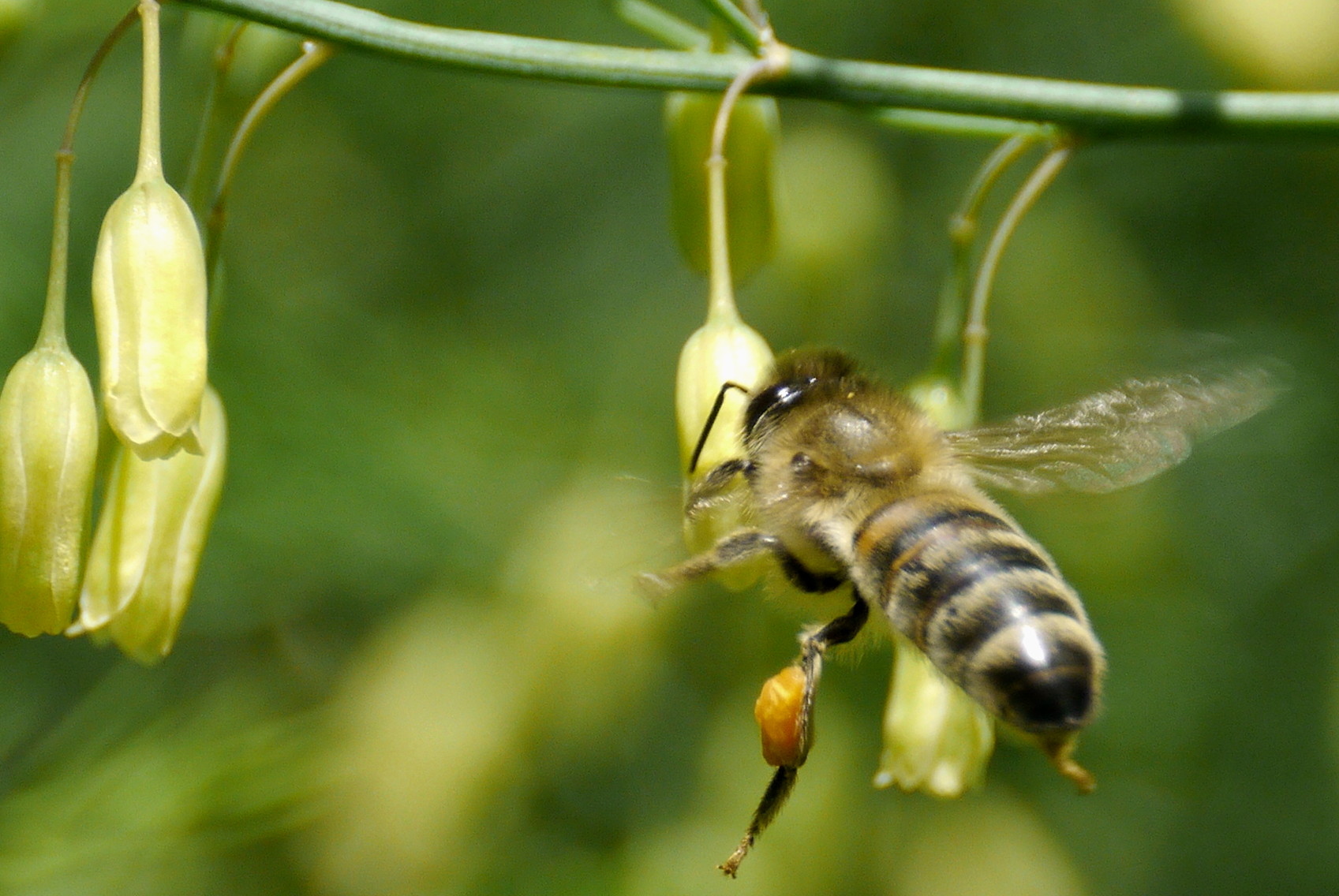
honey bee collecting pollen from asparagus flower

If its not to make honey, then what is the pollen being collected for?

It is the bees’ source of protein. In a year, a colony needs to collect and eat about 45 kilos of pollen. No single pollen delivers the full protein requirement, so bees collect pollen from many different sources.

When stored in the comb, it is possible (to someone more experienced than us) to identify the flowers from which the pollen was collected, by looking at the colour.

Back at the hive, the pollen is mixed with salivary products and small quantities of honey, and then stored in antiseptic cells adjacent to the empty brood cells that await the new generation. There it undergoes a chemical change becoming what is referred to as ‘bee bread’. This bee bread is also the principle food of adult nurse bees. Once she has ingested it, her digestive enzymes transform the nutritional supplement into a type of ‘mother’s milk’ which is then fed to the infant bee larvae.

  • most pollen is used as food for the larvae
  • pollen is the male reproductive spore of the plant
  • the baskets on the back legs are called corbiculae

honey bee, with full pollen baskets, on asparagus flower

Bee Forage : June

Would madam prefer nectar – the sweet, sugary fluid provided by the bramble flower? Also, the drink of the gods.

What’s on the menu this month? Forage is the term that we beekeepers use for the food sources available to bees. The reference books talk about the June Gap – a time when one mass food source has finished and another not yet begun. Its true that the oilseed rape has long since lost its bright yellow plumage and the sunflowers are nowhere near flowering. I am keen to find out what the bees are feasting on – not least so that we can perhaps plant more of their favourites for next year.

So far, I have seen plenty of activity around the lavender, honeysuckle and blackberry flowers. And then my attention was drawn to the asparagus bed. We stopped harvesting the asparagus about 4 weeks ago and it is now a mass of ferny foliage. And heavy buzzing. Its full of bees, all sporting bright orange pollen sacs on their back legs. The bees over at the bramble patch don’t have this. Time to delve into the reference books – here’s some pertinent foraging facts…

  • honey bees collect both nectar and pollen from flowers
  • only the nectar is used to make honey
  • they only collect one or the other on a trip
  • the nectar is transported in the stomach
  • this stomach is separate from the digestive stomach, although the bee can open a valve between the two if she is hungry
  • nectar is mostly water with dissolved sugar – the sugar content being between 25% and 50%
  • honey bees will collect nectar as far as 14 kms away from their hive
  • after visiting between 150 and 1500 flowers, the nectar stomach is full and almost equal to her starting weight

    Or perhaps, madam is partial to the nitrogen rich, protein packed pollen as found in these asparagus flowers?

    Phwoar

    birds do it, bees do it…
    ~ Spotted Asparagus Beetles ~

Scramble in the Bramble

Not too far from the hive, I discovered a patch of bramble which is ALIVE with bees, bugs and butterflies. The bramble flowers are just opening, and there’s a sort of creeper there too, just blooming. The best time to go is mid morning – I think there’s plenty to go round, but I did witness a couple of altercations.

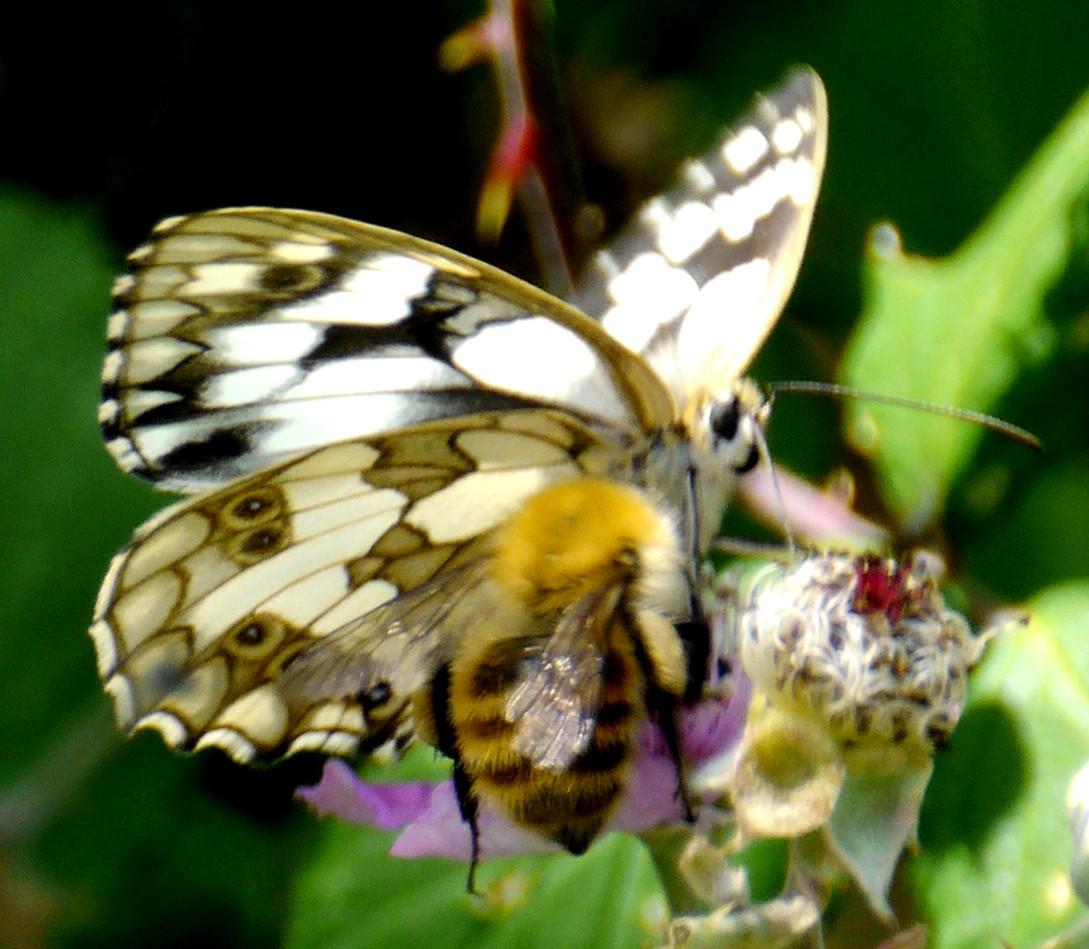
~ a Marbled White Butterfly takes on a bee ~
the butterfly won

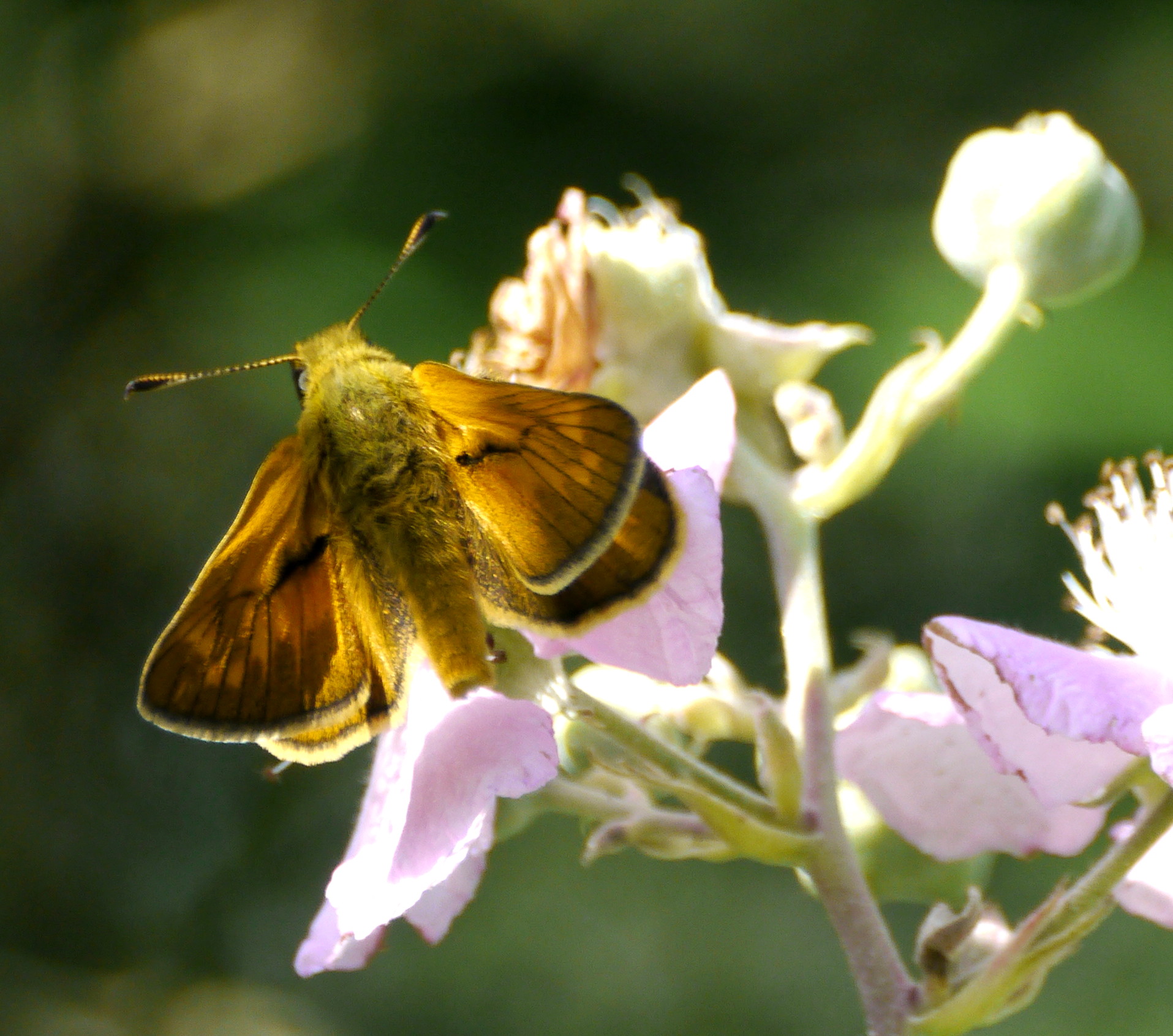
~ Large Skipper butterfly ~
has a large furry body and striped antennae

another butterfly v bee altercation
the butterfly is a Cabbage White

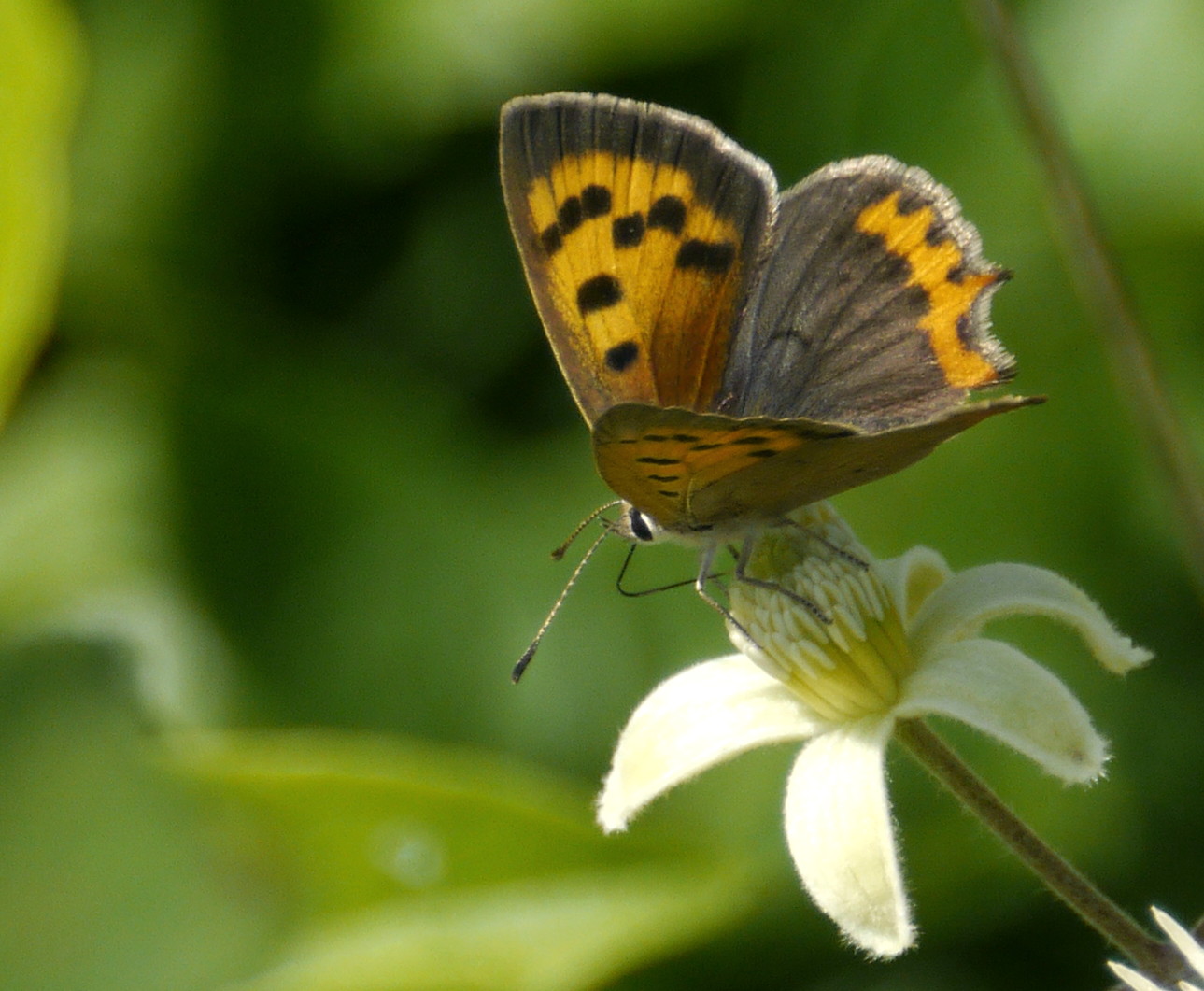
~ Small Copper butterfly (Lycaena phlaes) ~
sitting on Travellers Joy flower (Clematis vitalba)

The Plight of the Bumble Bee

or beware squiffy aerodynamicists

they’re fat, they’re round, they can’t get off the ground…

The odd thing about this myth regarding bumblebees theoretically defying the laws of physics, is that the story is so widespread and has persisted for so long.  The basic principles of bumblebee flight have been pretty well understood for many years. Somehow, though, the idea that bees ‘violate aerodynamic theory’ has become embedded in folklore.

The origins of this myth is unclear – one story tells of a dinner where a biologist asked an aerodynamics expert about insect flight. The aerodynamicist did a few calculations and found that, according to the accepted theory of the day, bumblebees didn’t generate enough lift to fly. The biologist promptly spread the story far and wide. Another version concerns a French entomologist, who applied the laws of air resistance to insects, and concluded that bumblebees clearly shouldn’t be able to get off the ground.

Returning to the first anecdote, the aerodynamicist, once he sobered up, realised that the problem was a faulty analogy between bees and conventional fixed-wing aircraft. Bees’ wings are small relative to their bodies. If an airplane were built the same way, it would never take off. But bees aren’t like airplanes, they’re like helicopters (a bit). Their wings work on the same principle as helicopter blades – to be precise  ‘reverse-pitch semirotary helicopter blades’.  A moving airfoil, whether it’s a helicopter blade or a bee wing, generates a lot more lift than a stationary one.

Another challenge with bees wasn’t figuring out the aerodynamics but the mechanics: specifically, how bees can move their wings so fast – roughly 200 beats per second, which is 10 or 20 times the firing rate of the nervous system. The trick apparently is that the bee’s wing muscles (thorax muscles, actually) don’t expand and contract so much as vibrate, like a rubber band. A nerve impulse comes along and twangs the muscle, much as you might pluck a guitar string, and it vibrates the wing up and down a few times until the next impulse comes along.

I also need to mention dynamic stall – which sounds like an oxymoron (and possibly handy to know about if you are at a dinner party with a squiffy aerodynamicist) – its the effect that occurs when the wings change their angle of attack – ie they don’t just flap up and down, they also do some interesting gyrations. The rapid change can cause a strong vortex to be shed from the leading edge (front) of the wing, and travel backwards over and above the wing. The vortex, containing high-velocity airflows, briefly increases the lift produced by the wing. As soon as it passes behind the trailing edge (back), however, the lift reduces dramatically, and the wing is in normal stall.

Bumblebee flight is being studied using lasers and special cameras. Much remains to be done to understand it fully, but the manoeuverability and efficiency of bumblebee flight tells us that we need to better understand it to improve our own methods of flying.

My observation is that they are blinking difficult to capture on film, especially in flight – constantly on the move, whizzing hither and thither – too much dynamic and not enough stall for my purposes.

‘there is an art, or rather a knack to flying. The knack lies in learning how to throw yourself at the ground and miss’
~ the late, great Adams Douglas Adams : Hitchhiker’s Guide to the Galaxy

sources : Cecil Adams and Wikipedia

Raising the Roof

beejou penthouse suite goes on

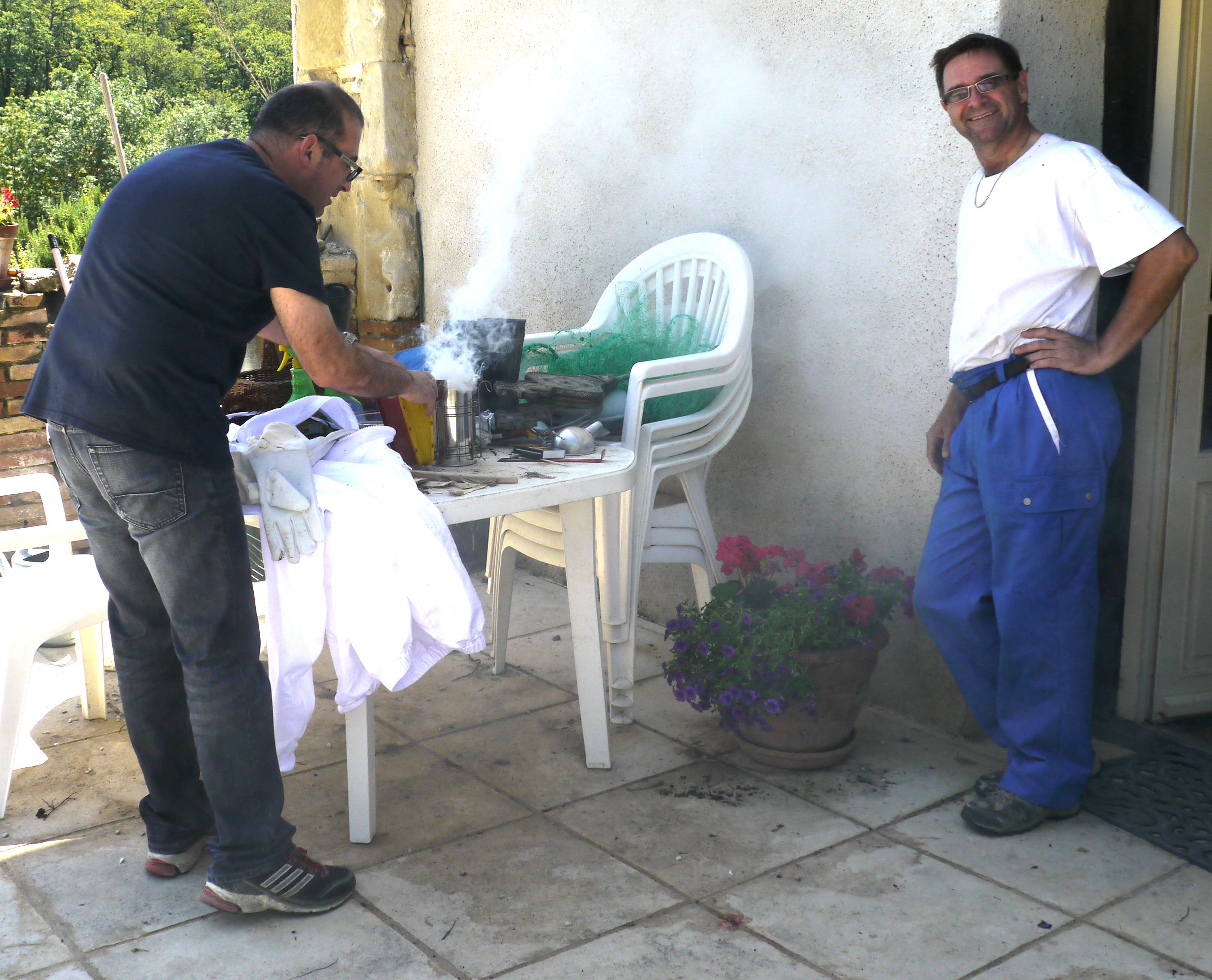
Its a sunny Sunday afternoon, and time to add the first super. Jean-Philippe has come to help, and most of the bees are off out. The first task is to get the smoker working. We have bought special pellets made from straw and lavender flowers and after some trial and error, it was discovered that the best way to get these going is with newspaper, wood shavings and pine needles – we stopped short of petrol.

there must be something about those blue French workman’s trousers

 The smoke has a calming effect on the bees – it doesn’t seem to work on border collies, or indeed, wives.

All requisite bits and pieces gathered together – and its off to Bee Square.

The first job is to remove the sticky tape from the current cover – and then have a look at the frames. The bees are building their own comb – but there’s still lots of work to do on the outer frames.   

Dallas gingerly inspects a frame

Going with the advice of the Venerable Beede (and against that of the reference books), we are not going to be adding the queen excluder. This is a grill, which keeps the queen and her egg laying activity confined to the brood box, so that the super is exclusively for honey storage. VB believes that the all the bees will be happier without this restrictive barrier – and so what if a few cells of the super frames are given over to eggs.

Quick inspection over, then its on with the new super, on with Andy’s newly constructed perspex layer, and topped off with the roof. Thats another hive extended and ready for honey production.

here’s your glass ceiling, girls


Andy getting zee kit on